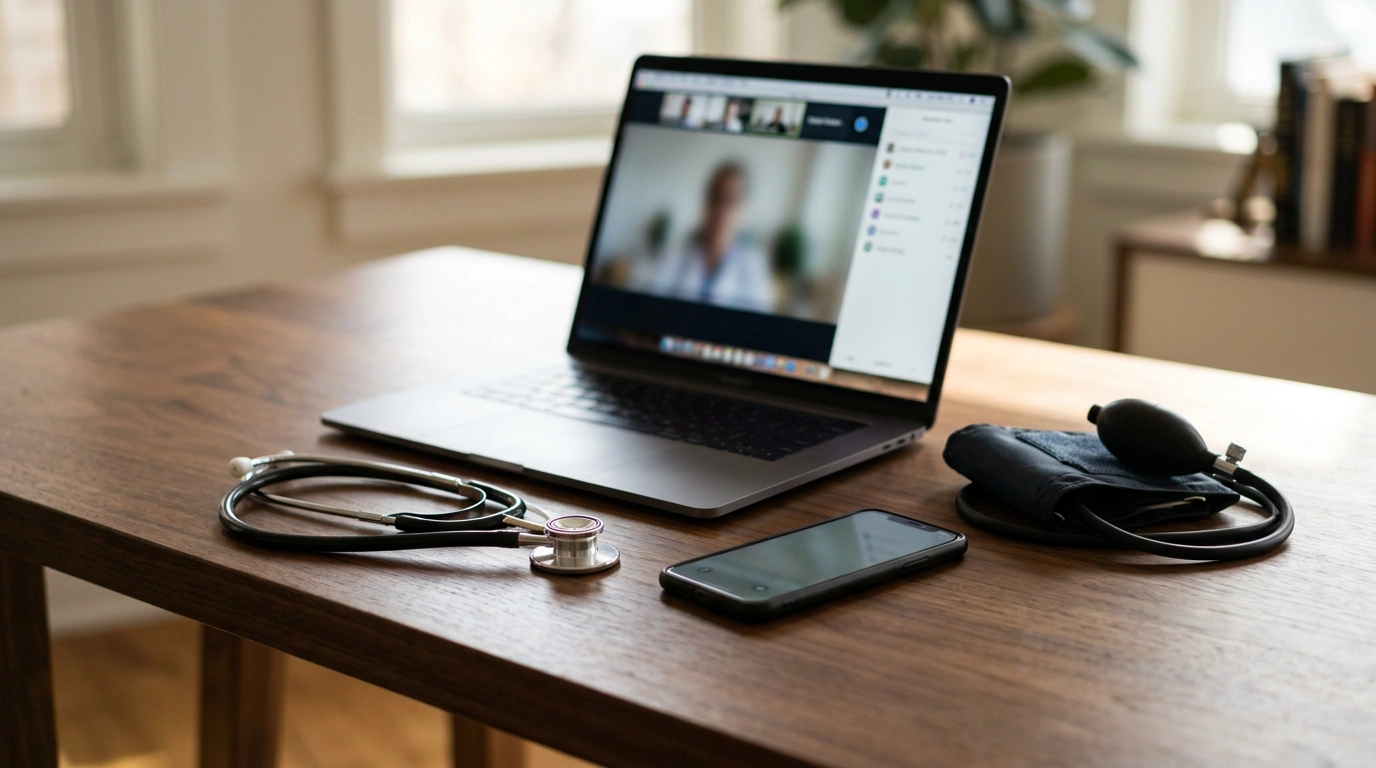
Telemedicine in Scottsdale works well for conversations that depend mostly on your history, such as follow-ups, medication questions and lab reviews. It is not suited to emergencies or problems that need a hands-on exam, in-office testing or a procedure. A good clinician will tell you plainly which format fits your concern.
Telemedicine can save a drive across the Valley, especially during an Arizona summer. But a video or phone visit is not the right tool for every concern. Knowing the difference helps you get appropriate care, sooner.
What a telemedicine visit is
A telemedicine visit is a medical appointment held by video or phone with a licensed clinician. The visit follows the same professional standards as an office visit: your physician reviews your history, asks questions, discusses options and documents the encounter in your record. What changes is the setting, and what the clinician can observe and measure.
Telemedicine in Scottsdale: concerns that often suit a virtual visit
Depending on your history, a physician may be able to address these remotely:
- Follow-up conversations about a long-standing condition, medications or lab results
- Medication questions, including side effects, timing and refill reviews
- Mild, common illness symptoms such as cold-like symptoms or seasonal allergies
- Review of lab or imaging results that have already been completed
- Lifestyle and prevention discussions, including sleep, nutrition, activity and stress
- Care coordination, such as deciding whether a specialist referral makes sense
- Questions about a plan that began in the office, such as how a new routine is going
Telemedicine tends to work best when the physician already knows you. A clinician who has examined you and understands your baseline can often judge more quickly whether a virtual conversation is enough.
When an in-person exam is required
Some situations call for a physical exam, in-office testing or urgent care:
- Chest pain, trouble breathing, sudden weakness, signs of a stroke or severe injury. These are emergencies. Call 911 or go to the nearest emergency department.
- Conditions that need a hands-on exam, such as abdominal pain, joint injuries or skin changes that need close inspection
- Tests that require a sample or equipment, such as blood draws, EKGs, urine tests or imaging
- Procedures, including vaccinations, wound care and injections
- Symptoms that are severe, worsening quickly or not improving after a virtual visit
If a physician starts with a virtual visit and decides more is needed, you should expect a clear explanation and a plan for in-person care.
How to decide between virtual and in-person
Ask yourself three questions:
- Does my concern depend mainly on a conversation, or on a physical exam?
- Do I already have a relationship with a physician who knows my history?
- Are my symptoms severe or getting worse quickly?
If the answer to the last question is yes, skip the virtual visit and seek in-person or emergency care. When you are unsure, call the office and ask which format fits. Our guide to same-day primary care access also explains how to choose between your doctor, urgent care and the ER.
Technology and privacy basics
A smooth virtual visit usually needs only a few things:
- A reliable connection. Wi-Fi is usually more stable than a weak cellular signal.
- A private space. Choose a quiet room where you can speak openly, and avoid public networks for health discussions.
- A charged phone, tablet or computer with a working camera and microphone, tested before the visit
- Your information handy. Medication names and doses, recent readings such as blood pressure or glucose, and a short list of questions.
On privacy, health information shared during a clinical telemedicine visit is generally protected under federal HIPAA rules when it is handled by a covered provider using appropriate tools. The U.S. Department of Health and Human Services maintains plain-language guidance at HHS telehealth privacy guidance. Consumer video apps are not all equal, so ask your clinic which platform it uses and how it protects your information. Our telehealth consent page explains how consent works at Celeste Clinica.
Licensure: Arizona, Florida and California
Physicians are licensed by individual states, and in general a physician must hold a license in the state where the patient is located during the visit. That means a visit with a Scottsdale clinician is typically appropriate when you are physically in a state where that clinician is licensed, even if you are traveling or live part of the year elsewhere.
Dr. Nima Ghadimi is licensed in Arizona, Florida and California. If you spend winters in Florida or travel to California, tell the office where you will be at the time of a visit so the team can confirm whether a virtual appointment is possible. Rules can change and differ by state, so verify details with the clinic and with a state medical board, such as the Arizona Medical Board, before relying on them.
Frequently asked questions
Can I use telemedicine if I am out of state?
Possibly. It depends on where you are located during the visit and whether your physician is licensed there. Ask before you schedule.
Can a physician prescribe medication during a telemedicine visit?
Sometimes. It depends on your history, the medication and applicable state and federal rules. Some medications require an in-person evaluation first.
Is a telemedicine visit a replacement for seeing my doctor in person?
No. It is one option among several. Many patients combine virtual conversations with in-person visits, so the format follows the medical need.
Where continuity fits in
At Celeste Clinica, a Scottsdale direct primary care practice led by Dr. Nima Ghadimi, MD, members can combine virtual conversations with in-person visits. All care begins with a physician consultation. Read more about telemedicine for established patients.
This article is educational and is not medical advice. It does not replace an evaluation by a licensed physician, and results vary. If you think you are having a medical emergency, call 911.